Archaeological news about the Archaeology of Early Medieval Europe from the Archaeology in Europe web site
Sunday, 26 April 2015
Reindeer Antlers Suggest Viking Age Began With Trade
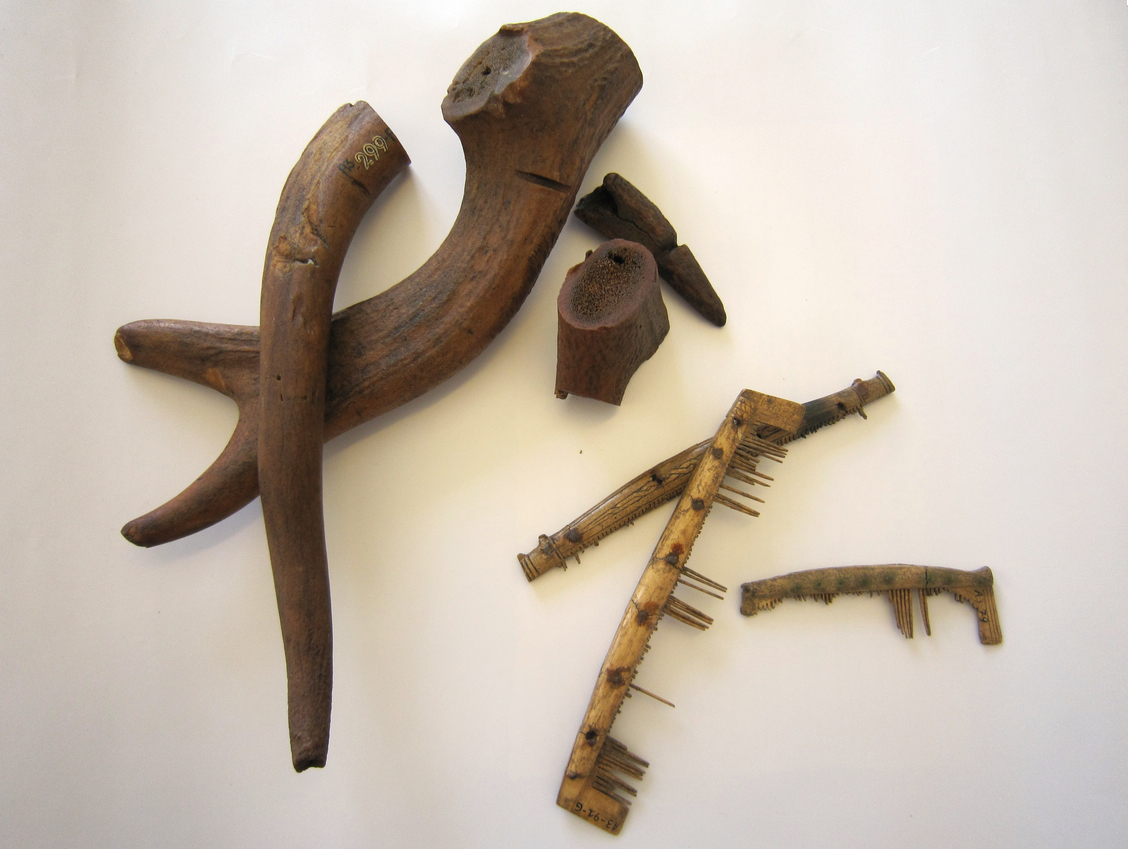
Antlers from Norwegian reindeer have been unearthed in Ribe, the oldest commercial center in Denmark. The antlers have been dated to A.D. 725, some 70 years before the Viking raid on the Lindisfarne monastery in northern England. “The Viking Age becomes a phenomenon in Western Europe because the Vikings learned to use maritime mobility to their advantage. They learned to master sailing to such an extent that they get to the coast of England where the locals don’t expect anything. They come quickly, plunder the unprepared victims, and leave again—a sort of hit and run,” Søren Sindbæk of Aarhus University toldScience Nordic. The Norwegian reindeer antlers suggest that Norway’s earliest so-called Vikings developed their maritime skills through trade. “Now we can prove that shipping between Norway and the market town of Ribe was established prior to the Viking era, and trade networks helped to create the incentives and the knowledge of the sea, which made the Viking raids possible. It is the first time that we can clearly link two very important phenomena, the lock and key if you like, of the Viking Age,” he said. For more, see "The First Vikings."
Read the rest of this article...
Saturday, 18 April 2015
South Iceland Cave Made before Settlement
Kverkahellir is close to Seljalandsfoss waterfall. Photo: Geir Ólafsson.
Archaeologist Kristján Ahronson has concluded that Kverkarhellir, a manmade cave between waterfall Seljalandsfoss and farm Seljaland in South Iceland, was partly created around 800 AD, before the settlement of Iceland, which, according to sources, began in 874.
Ahronson presented the results of his analysis of volcanic ash layers from around the cave, among other findings, covered in his book Into the Ocean, at the University of Iceland yesterday, RÚV reports.
“We are about to identify a large dump of material that looks like waste material from construction and dates to around 800 or so,” Ahronson explained. “Kverkahellir, along with Seljalandshellir, is remarkable as it is part of a number of cave sites in southern Iceland, manngerðir hellar [‘manmade caves’], that are marked by cross sculpture.”
Read the rest of this article...
Friday, 17 April 2015
Pictish fort found off Aberdeenshire coast
Archaeologists have uncovered a "very significant" Pictish fort after scaling a remote sea stack off the coast of Aberdeenshire.
Archaeologists believe they have uncovered a Pictish fort off the coast of Aberdeenshire
[Credit: BBC]
The team from the University of Aberdeen believe the ancient remains could be one of many along the coast south of Stonehaven.
It is the first time an official excavation has been carried out there.
Pictish symbol stones were said to be found on the Dunnicaer sea stack by locals in the 19th Century.
Thursday, 16 April 2015
Burials from Rockbourne Roman villa re-examined
Lower jaw deformities from birth, a missing right hand and foot bones, trepanning to exorcise “bad spirits” and a lonely burial were the lot of a middle-aged Saxon or early medieval man found face down in a shallow grave, say archaeologists investigating skeletons found at a Hampshire Roman villa during the 1960s.
A reconstruction of the skull of a man found weighed down in a lonely grave at Hampshire's largest Roman villa [Credit: © Hampshire Cultural Trust]
The latter of two male discoveries at Rockbourne, near the town of Fordingbridge on the River Avon, was originally found in 1965.
Analysts believe the community would have buried him in a lonely place and weighed him down with stones after viewing a deformity on the left hand side of his jaw as a sign of his troubles and a potentially evil influence.
Saturday, 11 April 2015
Greenland Vikings outlived climate change for centuries
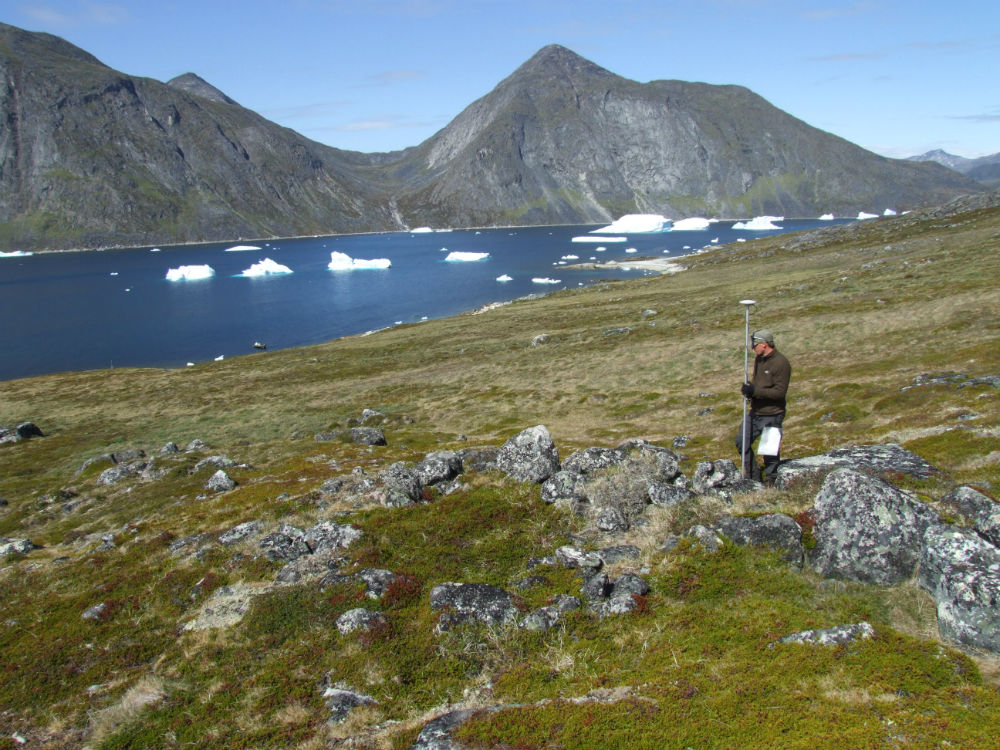
New study puts down the myth that climate change killed off the thick-skinned Norsemen in Greenland. (Photo: C. K. Madsen)
In the middle of the 13th century the Vikings who had settled in Greenland encountered no less than ten years of harsh and cold winters and summers. The Norsemen, who were living as farmers, bid farewell to many of their cattle during that period.
The Greenland Vikings were also prevented from setting sail to fetch supplies from their homelands in Europe because they didn't have enough timber to build trading ships. So when Scandinavian traders didn't happen to pass by they were left entirely on their own.
But this didn't knock them out; on the contrary they lived with the worsening climate for almost 200 years during what we later would call the Little Ice Age. This is the conclusion of a new Ph.D. thesis.
Read the rest of this article...
Friday, 10 April 2015
Vikings Survived Greenland’s Harsh Weather for Centuries
Vikings in Greenland survived the Little Ice Age for much longer than previously thought, according to comprehensive studies of the landscape conducted by archaeologist Christian Koch Madsen of the National Museum of Denmark. “The stories we have heard so far about the climate getting worse and the Norsemen disappearing simply don’t hold water,” he told Science Nordic. He says that there were no more than 2,500 people living in Greenland in the middle of the thirteenth century. Earlier estimates have placed the population as high as 6,000. “When the harsh climatic changes began to set in, we can see that the outermost farms were gradually abandoned.
Read the rest of this article...
Subscribe to:
Posts (Atom)