Archaeological news about the Archaeology of Early Medieval Europe from the Archaeology in Europe web site

Wednesday, 25 September 2019

‘Ghostly outlines’ of woman who died 1,400 years ago discovered

Ghostly outlines of a woman who died 1,400 years ago have been discovered. (Picture PA) 

Archaeologists have discovered the ‘ghostly outlines’ of a woman who died around 1,400 years ago.

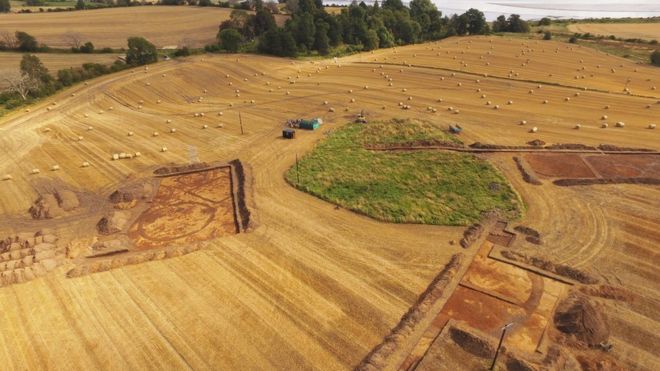
 The partially preserved remains were found during an excavation near Muir of Ord on the Black Isle in the Scottish Highlands. 

The discovery was made on the final day of a three-week project at one of the largest Pictish cemeteries in Scotland and has left experts ‘astonished’. 

Dark patches revealed the stains of a skeleton that has been broken down in acidic soil of the ancient grave. Steve Birch, archaeological supervisor at the site, said: ‘After I found some blackened patches in the ground I decided to trowel back at that level and to my astonishment, the ghostly outlines of a skeleton started to appear.

Read the rest of this article...

Monday, 16 September 2019

Large '1,400-year-old cemetery' uncovered in Highlands

The possible Pictish cemetery is being excavated in a field in the Black Isle
ANDY HICKIE

What could turn out to be one of Scotland's largest Pictish burial grounds is being excavated on the Black Isle in the Highlands.

Archaeologists have confirmed the presence of a number of barrows, or burial mounds, near Muir of Ord.

Enclosures ranging in size from about 8m (26ft) to more than 40m (131ft) across have also been uncovered.

Archaeologists said the possible Pictish barrow cemetery could be about 1,400 years old.

Read the rest of this article...

'Lovers of Modena' Buried Hand-in-Hand Turn Out to Be Men


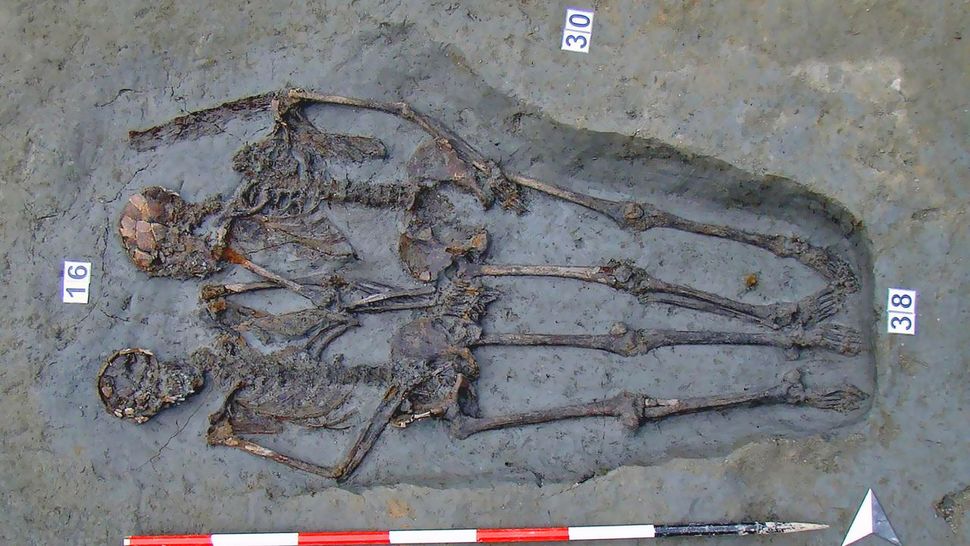
Two men were buried holding hands in an ancient cemetery in Modena, Italy. (Image: © University of Bologna/EPA/Shutterstock)
The "lovers of Modena" — two 1,600-year-old skeletons found holding hands inside their grave — are both men, new research reveals. 

There are few known examples in the ancient world of skeletons buried holding hands and most of those found have been male-female and not same sex.

Unearthed in an ancient cemetery in 2009, the skeletons attracted media attention because of their seemingly romantic death poses, which earned the skeletons the amorous nickname. But archaeologists couldn't determine the sexes of the perished lovers because of the poor condition of the skeletons.

However, a team of scientists has now analyzed the skeletons' teeth enamel and identified both skeletons as male, they reported online Sept. 11 in the journal Scientific Reports.

Read the rest of this article...
Church of Scotland sues for share of $2.5 million Viking treasure trove unearthed on church land

Treasures from the Galloway Hoard are displayed at the National Museums of Scotland on 
October 26, 2017 in Edinburgh.

The Church of Scotland is suing a man for a share of a $2.5 million Viking treasure trove he discovered with a metal detector on church land in 2014.

Retired businessman and detectorist Derek McLennan uncovered the 10th-century hoard in a field in the Dumfries and Galloway region of western Scotland.

The treasure trove, known as the Galloway Hoard, is regarded as one of the richest and most significant finds of Viking objects ever found in the United Kingdom. It included rare silver bracelets and brooches, a gold ring, a bird-shaped gold pin and an enameled Christian cross.

"I unearthed the first piece, initially I didn't understand what I had found because I thought it was a silver spoon and then I turned it over and wiped my thumb across it and I saw the Saltire-type of design and knew instantly it was Viking," McLennan told the BBC at the time of the discovery.

Fiona Hyslop, the Scottish culture secretary, noted that the Galloway Hoard "is one of the most important collections ever discovered in Scotland," and "opens a window on a significant period in the history of Scotland," according to National Museums Scotland.

Read the rest of this article...

Sunday, 15 September 2019

Treasure hunter sued by Church of Scotland over record £2million haul of Viking relics he found on their land

Derek McLennan is being sued by the Church of ScotlandCredit: PA:Press Association

The metal detector buff now faces a legal challenge at the Court of Session in Edinburgh over cla­ims he hadn’t responded to church pleas for their share of the cash.

One source said last night: “There was an indication he was going to pay the church a finder’s fee. That’s why he is being taken to court.

“The church has been unable to get a hold of him. It doesn’t seem like there’s anything that would preclude him from being in touch, it appears to be a choice.

Read the rest of this article...

Church sues metal detectorist for share of £2m Viking treasure trove unearthed on its land

The Church of Scotland is taking legal action for a share of a Viking hoard 

The Church of Scotland is taking legal action for a share of a Viking hoard worth almost £2 million found on land it owns.

Metal detectorist Derek McLennan uncovered the 10th-century hoard, which includes silver bracelets and brooches, a gold ring, an enamelled Christian cross and a bird-shaped gold pin, in a Dumfries and Galloway field in 2014.

National Museums Scotland raised £1.98 million to acquire the treasure trove of items for the nation.

Rules on discoveries in Scotland mean only the finder receives payment, differing from the rest of the UK, where awards are split with the land owner.

But it was reported at the time the church would share in the proceeds.

Church trustees are now taking legal action at the Court of Session in Edinburgh.

Read the rest of this article...

Thursday, 22 August 2019

Viking migration left a lasting legacy on Ireland’s population

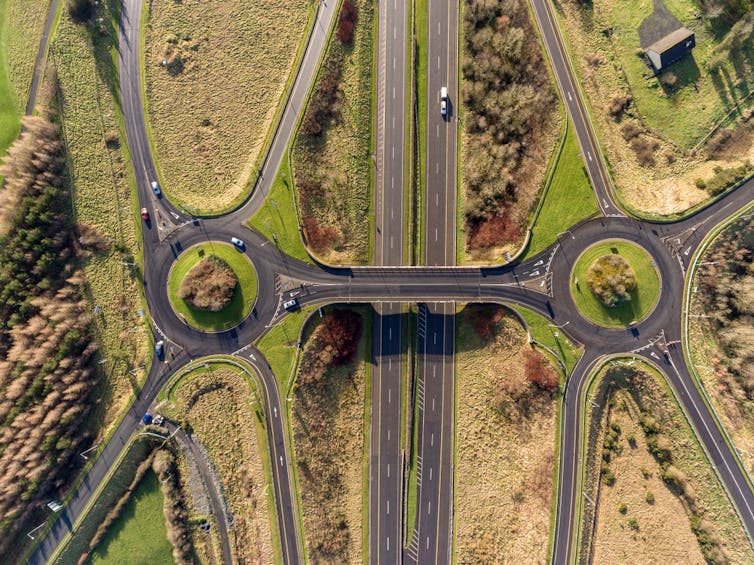
Big roads and construction projects in Ireland have unearthed a treasure trove of data
for archeologists.  
Shutterupeira/Shutterstock

The early medieval period in Ireland (400-1200AD) was a time of key importance. It was a turning point in European history and the origin of much contemporary Irish culture and identity. Ireland, the early medieval “land of saints and scholars”, had much cultural and economic growth during the 5th and 6th centuries. Elsewhere in Europe there were unstable populations in the wake of the fall of Rome.

Until now it was assumed that this Irish Golden Age was followed by stability and consolidation, and a steadily increasing population, despite disruption caused by Viking raids throughout the 9th century. Irish society at this time was also in a state of flux. The Vikings eventually established a network of towns that stood apart from the rural “native” Irish world.

A new analysis of the archaeological record, however, reaches a set of rather different conclusions. In our study, published in the Journal of Archaeological Science, we found that the Irish population had actually been in a serious decline for almost two centuries before the Vikings arrived. Our research reveals how ancient migrations of Vikings left a lasting legacy in the modern population.

Read the rest of this article...