Archaeological news about the Archaeology of Early Medieval Europe from the Archaeology in Europe web site

Friday, 7 June 2019

Second oldest church in Germany uncovered

The site in the foundation of the church where human remains have also been found. 
Photo: DPA

Archaeologists have discovered Germany’s second oldest church hidden within a cathedral in the west of the country.

In the so-called "Old Cathedral" in Mainz, which is today the evangelical Church of St John, archaeologists found the remains of another church built 1,200 years ago in the time of Charlemagne, Deacon Andreas Klodt said on Tuesday.

Only Trier on the Mosel River has an older church, with its cathedral dating back to Roman times, making the find the second oldest church in the country.

Professor Matthias Untermann from the Institute of Art History in Heidelberg said the remains of the Carolingian walls stretched from the basement to the roof.

Read the rest of this article...

Monday, 3 June 2019

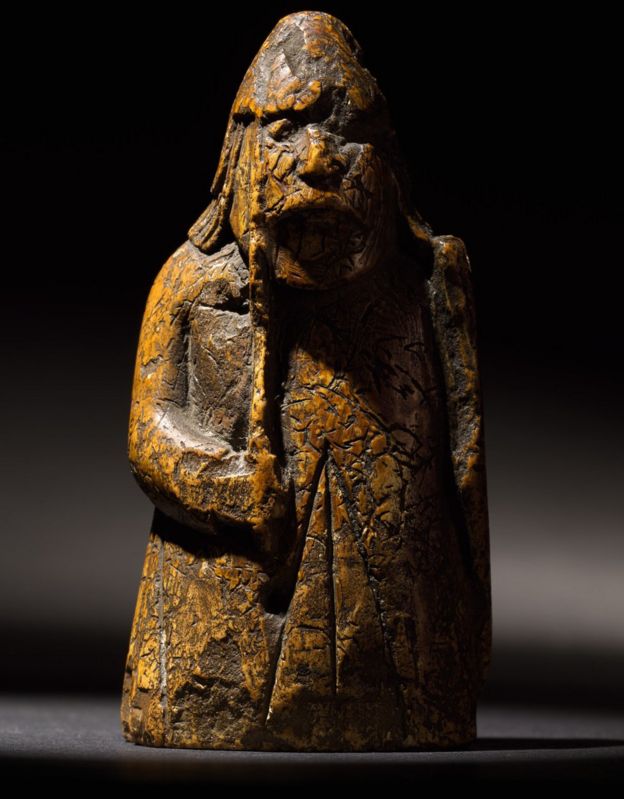
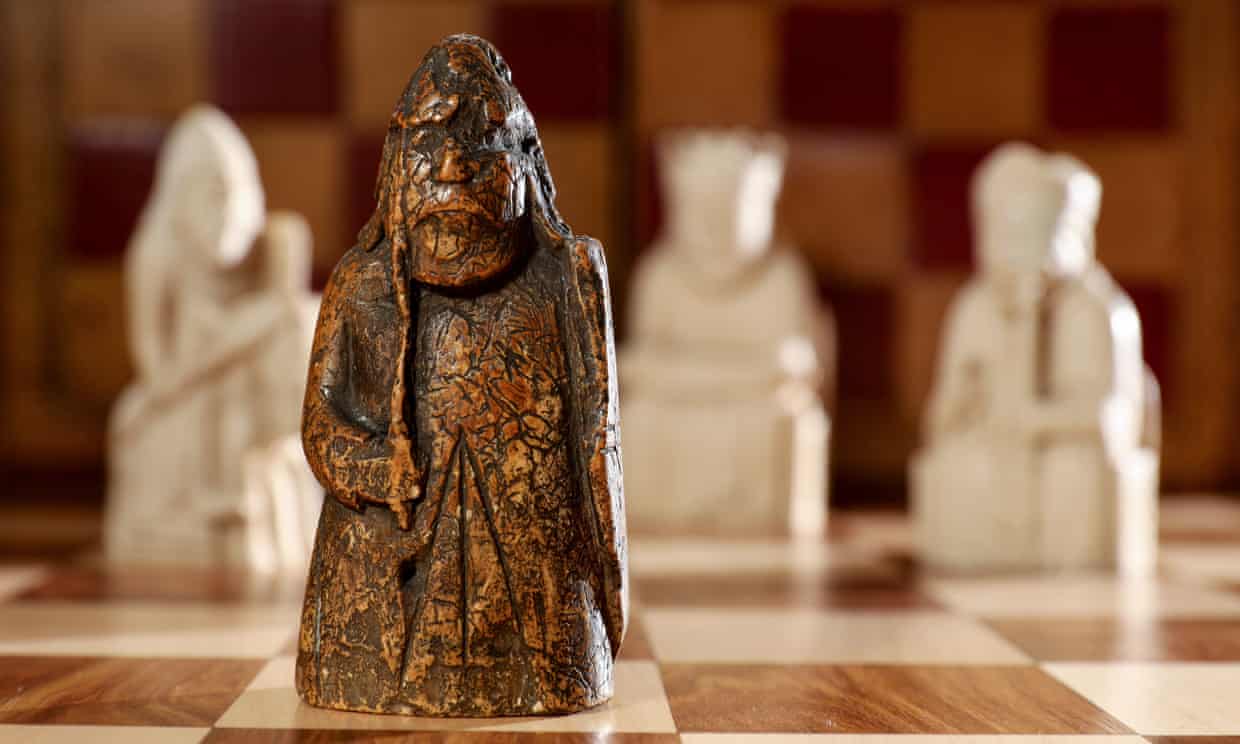
Long-lost Lewis Chessman found in Edinburgh family's drawer


A medieval chess piece that was missing for almost 200 years had been unknowingly kept in a drawer by an Edinburgh family.

They had no idea that the object was one of the long-lost Lewis Chessmen - which could now fetch £1m at auction.

The chessmen were found on the Isle of Lewis in 1831 but the whereabouts of five pieces have remained a mystery.

The Edinburgh family's grandfather, an antiques dealer, had bought the chess piece for £5 in 1964.

He had no idea of the significance of the 8.8cm piece (3.5in), made from walrus ivory, which he passed down to his family.

They have looked after it for 55 years without realising its importance, before taking it to Sotheby's auction house in London.

Read the rest of this article...
Lewis chessmen piece bought for £5 in 1964 could sell for £1m

The newly discovered medieval Lewis warder chess piece was missing for almost 200 years. Photograph: Tristan Fewings/Sotheby's/PA

A small walrus tusk warrior figure bought for £5 in 1964 – which, for years, was stored in a household drawer – is a missing piece from one of the true wonders of the medieval world, it has been revealed.

The Lewis chessmen were found in 1831 in the Outer Hebrides and became beloved museum collections in London and Edinburgh. They have also become well known in popular culture from Noggin the Nog to Harry Potter.

But of the 93 pieces found, five were known to be missing. Until now. On Monday the auction house Sotheby’s announced it had authenticated a missing piece and would sell it in July with an estimated value of between £600,000 and £1m.

The missing piece, measuring 8.8cm in height, is a Lewis warder and – 55 years ago – was purchased for £5, about £100 in today’s money.

Read the rest of this article...

Monday, 27 May 2019

Sensasjonell runestein funnet i Østfold

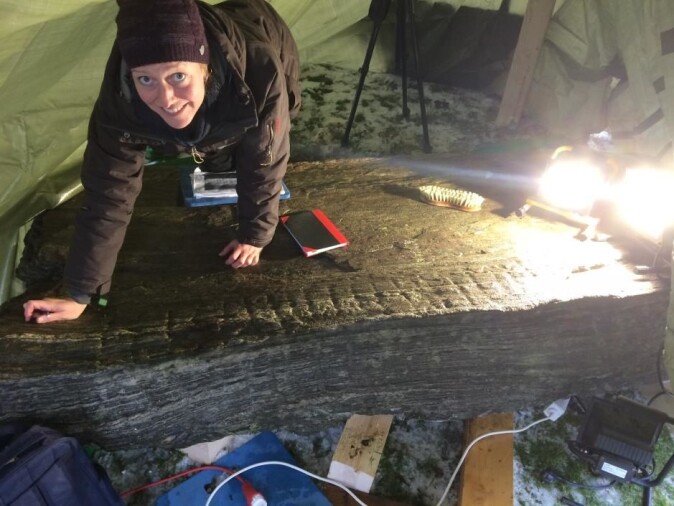
Karoline Kjesrud jobber for å identifisere runene på den slitte runesteinen. 
(Foto: Kulturhistorisk museum, Universitetet i Oslo)

Arkeologer har funnet en runestein som stammer fra 400-tallet, i Øverby i Rakkestad.

Det er uvanlig å finne runesteiner, og så gamle runesteiner er oppsiktsvekkende, mener Danmarks ledende ekspert på runer, Lisbeth Imer.

Den eldste danske runesteinen er fra starten av 700-tallet.

– Det er litt av en sensasjon. Vi er grønne av misunnelse her i Danmark, sier Imer, som er seniorforsker ved det danske Nationalmuseet.

Read the rest of this article...

Wednesday, 22 May 2019

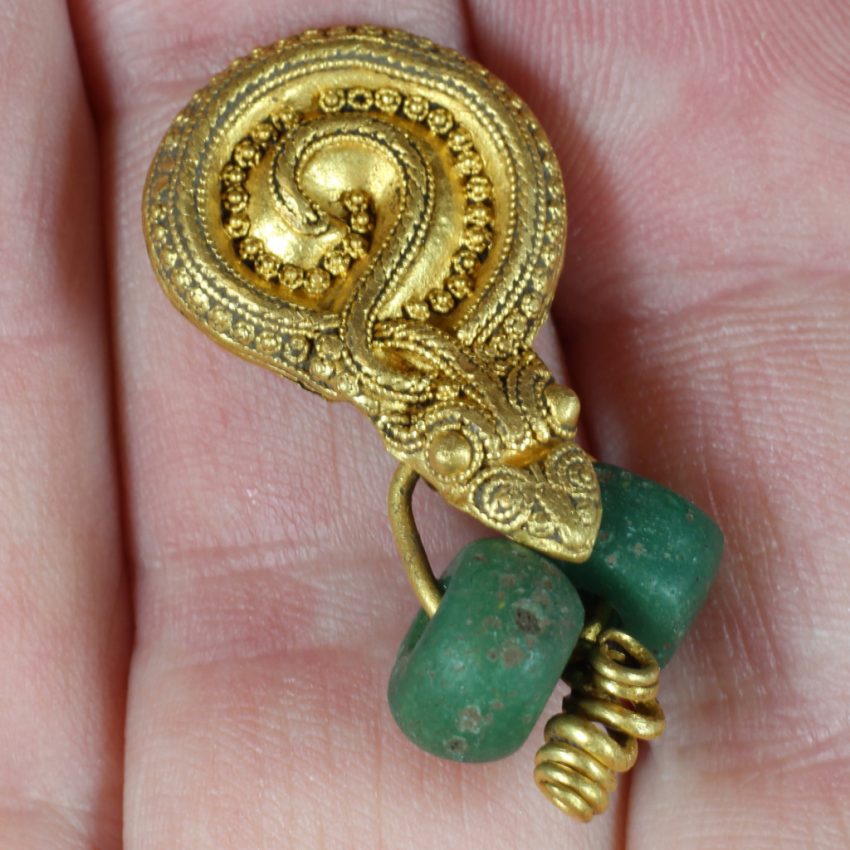
A gold serpent pendant from Viking Age Denmark

Photo: Southwest Jutland Museums.

This beautiful serpent pendant was recently discovered near Gørding in Denmark by Jean Stokholm and Doris Birch Mathiesen. Fashioned out of gold and decorated using the filigree technique, it most likely dates from the the 10th century AD.

It was originally suspended via a loop formed out of gold wire that was ornamented with a pair of green glass beads. Serpent pendants such as this one are known from across Viking Age Scandinavia and it has been suggested that they may have been associated with fertility or the god Odin (see Graslund, p. 126). This new find now forms part of the Southwest Jutland Museums.

Read the rest of this article...

Sunday, 19 May 2019

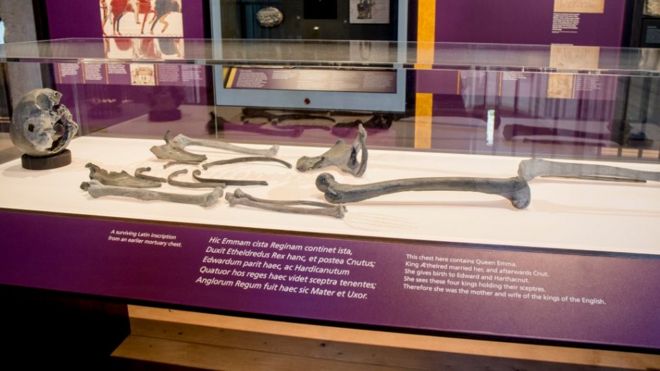
The riddle of Winchester Cathedral's skeletons

A reconstruction of Queen Emma's bones is on display but her skull is not completely intact making it too difficult to create a 3D model of her
Image copyright WINCHESTER CATHEDRAL

For centuries bones believed to be the remains of Anglo-Saxon and early Norman rulers and bishops have been kept in mortuary chests in Winchester Cathedral.

Over the years the skeletal remains have been mixed up and moved around, resulting in some confusion over whose they are.

Fresh research has now dated the contents of the chests and established that the only bones from a mature female are likely to be those of Queen Emma of Normandy.

But that is only the first piece in a puzzle researchers from the University of Bristol are now trying to solve.

They will use DNA extracted from the bones to try to establish the identity of the other 22 people whose remains were in the wooden caskets.

Read the rest of this article...

Friday, 17 May 2019

The Prittlewell Princely Burial Treasures go on show at Southend Museum

Gold crosses from the earliest dated princely Anglo-Saxon burial believed to have been placed over the man’s eyes © MOLA

Ellie Broad, Assistant Curator of Archaeology at Southend Museums, on the Prittlewell Anglo-Saxon princely burial going on permanent display at Southend Central Museum from May 11 – for the first time since their discovery 15 years ago
The Prittlewell Princely Burial is the earliest evidence of Anglo-Saxon Christianity ever found in England. Compared with the princely burials at Sutton Hoo and Taplow, Prittlewell has a beautiful and exotic array of artefacts, with many of the most impressive objects going on permanent display from May 11 2019.

In 2003, archaeologists from MOLA (Museum of London Archaeology) began excavating land in Prittlewell, Essex ahead of a road widening scheme. The discovery of a chamber grave came as a great surprise to the archaeologists as they uncovered incredible objects buried under centuries of earth.

A small, wood-lined chamber had been buried under a mound, which had collapsed over time, concealing its location and protecting its contents from robbers.

Read the rest of this article...