Archaeological news about the Archaeology of Early Medieval Europe from the Archaeology in Europe web site

Wednesday, 12 May 2021

Cerne Abbas Giant may have been carved into hill over 1000 years ago

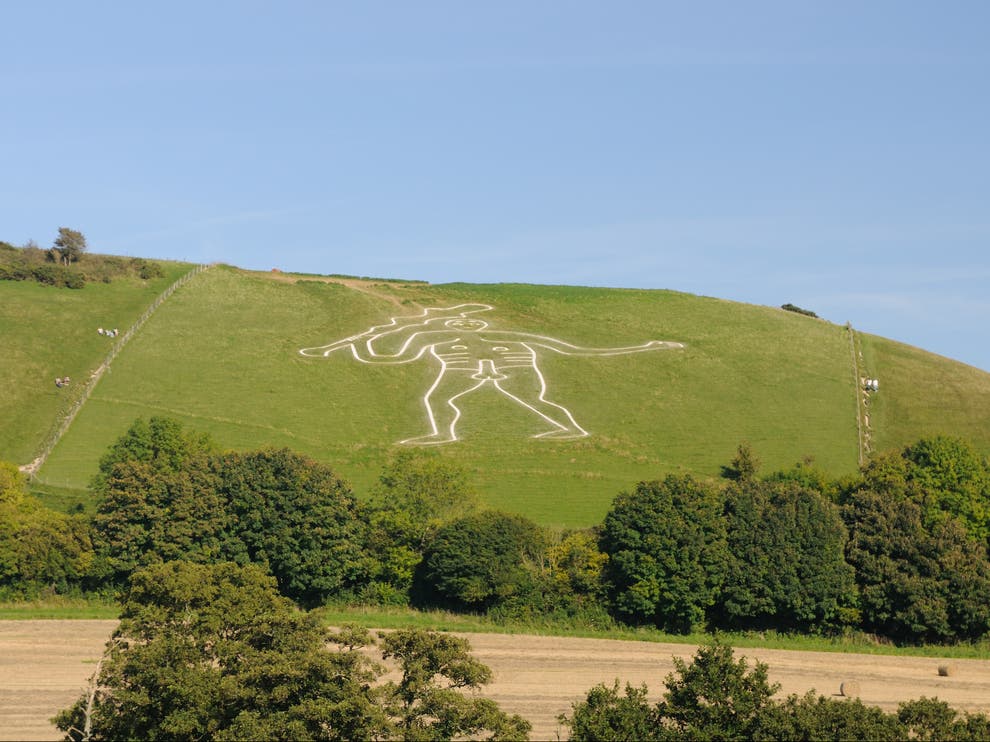
The Cerne Abbas Giant
National Trust Images/Mike Calnan/James Dobson

A mysterious chalk carving of a huge, naked man on an English hillside was made in the 10th century, according to the first attempt to archaeologically date the giant. The finding is unexpected because the earliest mentions of the Cerne Abbas Giant are from just over 300 years ago, suggesting it was forgotten for centuries.

Historians and archaeologists had many ideas about when the giant was constructed, says team member Mike Allen, an independent geoarchaeologist at Allen Environmental Archaeology in Codford, UK. “Everyone was wrong.”

The giant is carved into a hillside overlooking the village of Cerne Abbas in southern England. It is a figure of a man with a large, erect penis, holding a club. It was made by digging trenches into the hillside, then filling them with white chalk.

The earliest known reference to the giant is from 1694, from the records of the church in Cerne Abbas. The giant is absent from earlier records, notably a 1617 survey of the area by John Norden, who was famously thorough,

Read the rest of this article...

Cerne Abbas Giant: Why the Anglo-Saxons created England’s most macho hillside chalk figure

The giant, carved in solid lines from the chalk bedrock, measures in at 55 metres high, and carries a huge knobbled club, which measures 37 metres in length
(Getty/iStock)

Scientists have begun to solve one of Britain’s greatest archaeological mysteries – the age of one of the UK’s largest and most enigmatic artworks.

Until now archaeologists and historians had thought that a 55-metre tall figure, cut into a hillside in Dorset, the so-called Cerne Abbas Giant, was prehistoric or Roman – or that, alternatively, it had been created in the 17th century,

But new dating tests, organised by the National Trust, suggest that the giant hails from none of those periods and was instead constructed by the Anglo-Saxons.

The tests indicate that the massive hill figure was either fully or substantially created at some stage between the mid-7th century and the 13th century. The new dating evidence has potential implications for understanding some of England’s other surviving and lost giant chalk figures.

Read the rest of this article...

Tuesday, 4 May 2021

Viking remains lost for more than a century rediscovered in a museum

Woven wrist cuffs found at a Viking burial site

Antiquity Publications Ltd/Rimstad et al/R. Fortuna, National Museum of Denmark

The remains of a Viking have been rediscovered after being missing for more than a century. They were safely stored in a museum the whole time, but had been mislabelled.

The individual had been buried with expensive grave goods, suggesting they were an elite person or even royalty. They also seem to have been wearing long trousers with elaborate decorations.

The story of the Viking’s remains begins in 1868, near the village of Mammen in Denmark. A landowner named Laust Pedersen Skomager enlisted local farmers to help him remove the topsoil from a mound on his estate.

They found it concealed a wooden Viking burial chamber, now called Bjerringhøj. The farmers dug up the contents and shared them out, so when academics arrived on the scene soon after, they had first to recover the remains from their new owners.

Read more: https://www.newscientist.com/article/2276409-viking-remains-lost-for-more-than-a-century-rediscovered-in-a-museum/#ixzz6tuLEBnaw

Read the rest of this article...

Thursday, 29 April 2021

The Cave Where Vikings Offered Sacrifices To Stop The Apocalypse


The Surtshellir Cave in Iceland was discovered to be a trove full of Middle Eastern artifacts, and the location was used by the Vikings as an offering pit for sacraments to stop the apocalypse. The most noticeable artifact in the cave was a stone, boat-shaped structure that served as the main offering pit, as All That’s Interesting details: 

    As deputy director and chief curator of the Haffenreffer Museum of Anthropology at Brown University, Kevin Smith was thrilled at the discovery. The Surtshellir Cave in question was formed by a volcano that erupted nearly 1,100 years ago — and gave Smith a window into what might have happened there.

    Smith and his team also found 63 beads made of a mineral common in the Middle East but rarely found in Scandinavia.

Read the rest of this article...

Archeologists discover remains of Viking rituals in Iceland

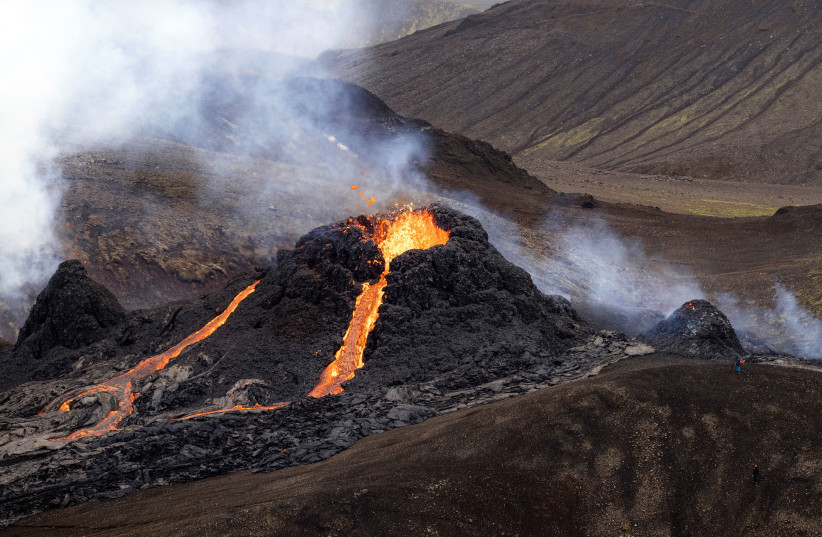
Volcano has erupted in Iceland near Reykjavik
(photo credit: REUTERS)

A site dating back to the Viking age, approximately 300 meters beyond the Surtshellir cave, located in Iceland, was discovered by archeologists, according to a report by Ancient Origins. 

The report stated that the site in question was used for ancient rituals performed by Vikings. 

Published in the Journal of Archaeological Science, the archeologists, some based in Iceland with others hailing from the US and Norway, recorded many of their findings on the Surtshellir cave - the most notable discovery being a "boat-shaped structure made of rocks."

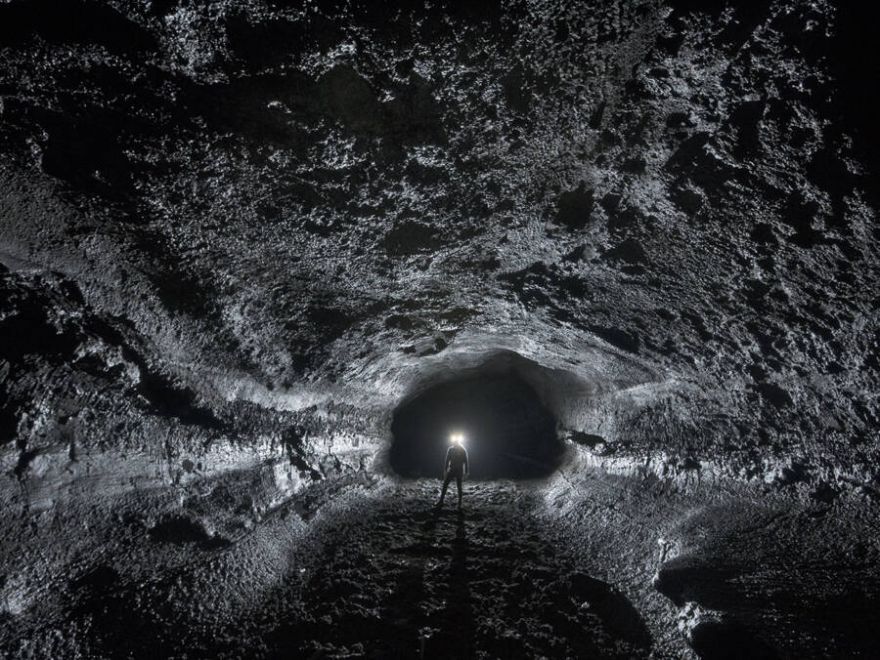
The Surtshellir cave is the longest lava cave in Iceland, stretching about 1.6 kilometers. It is named after the Viking fire giant Surtur, an integral figure in Norse mythology.  

Read the rest of this article...

Tuesday, 27 April 2021

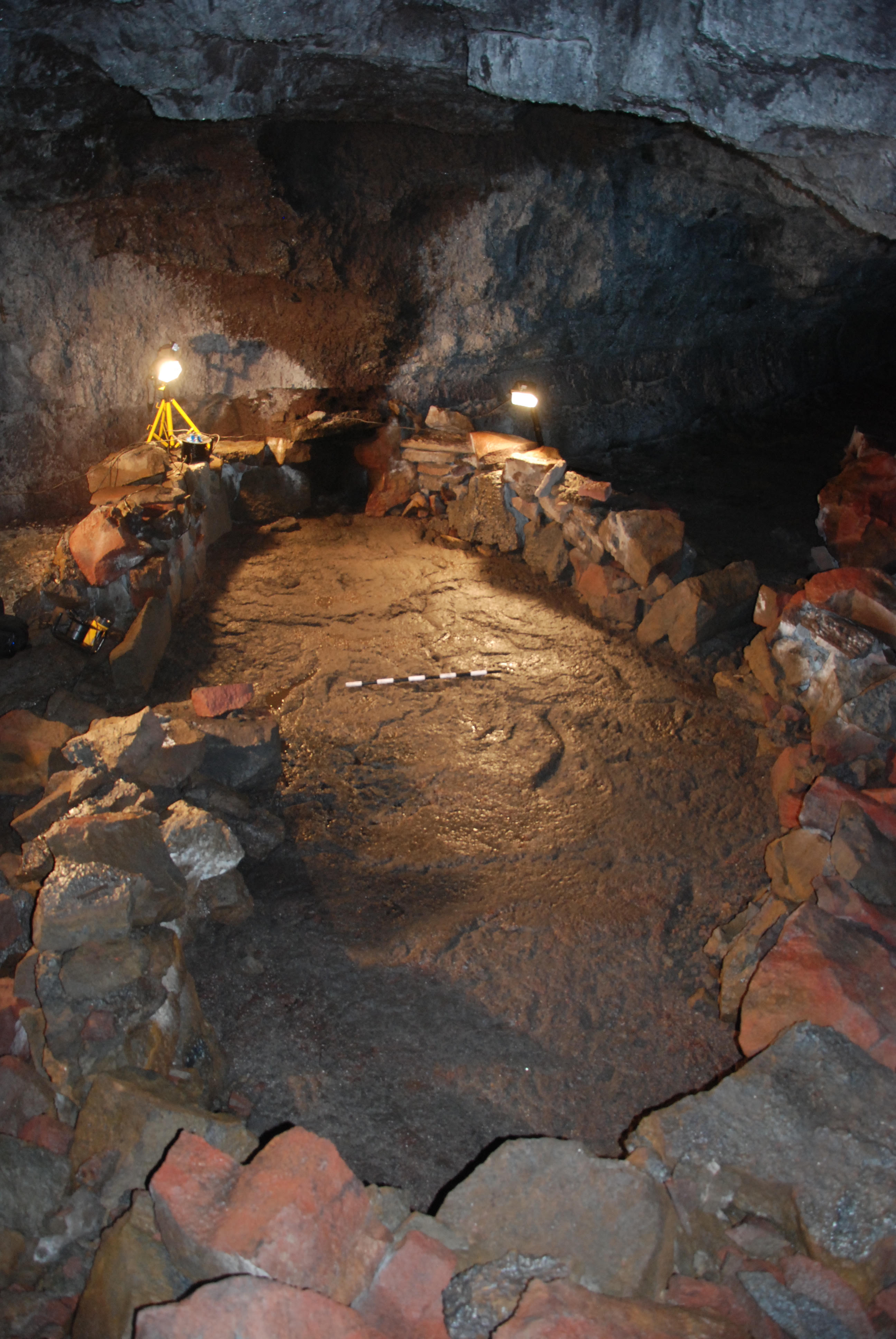
Boat-Shaped Viking Structure Found in Icelandic Cave

© Kevin P. Smith

PROVIDENCE, RHODE ISLAND—Live Science reports that a team of researchers led by Kevin Smith of Brown University has investigated a stone structure in Surtshellir Cave, which is located near a volcano in Iceland. The volcano is known to have erupted about 1,100 years ago, shortly after the island was colonized by Vikings. Smith said that after the lava from the eruption cooled, the Vikings built the boat-shaped structure with rocks. Within the boat’s outline, the researchers unearthed the bones of sheep, goat, cattle, horses, and pigs that had been burned at high temperatures. They also found orpiment, a mineral from eastern Turkey, and 63 beads, three of which came from Iraq.

Read the rest of this article...

Wednesday, 21 April 2021

Viking metalwork craft and expertise evolved from 8th to 9th century

Credit: CC0 Public Domain

The evolution of metalwork expertise and craftsmanship developed by Viking craftspeople in Denmark in the 8th and 9th centuries has been detailed in a study published in Archaeological and Anthropological Sciences. 

A team of researchers at Aarhus University, Denmark, analyzed tool fragments, raw materials such as metal bars, and complete objects such as keys and brooches, excavated from two sites in the town of Ribe, Denmark, a trading port established by Vikings in the eighth century.

The authors examined 1,126 samples of metalworking tools (crucibles and molds), 24 keys and brooches, and 24 metal bar ingots and fragments of spare metal. By analyzing samples from the surface of tools and identifying metallic traces contained in them, as well as examining the metallic composition of finished objects, the researchers were able to infer which metals were used to make these objects.

Read the rest of this article...