Archaeological news about the Archaeology of Early Medieval Europe from the Archaeology in Europe web site

Wednesday, 29 September 2021

A Danish man found buried treasure from the Iron Age using a metal detector, just hours after turning it on for the first time


Gold medallions, coins, and jewelry comprise an Iron Age hoard that a rookie metal detectorist recently discovered in Denmark. Conservation Center Vejle

Ole Ginnerup Schytz had never used a metal detector before. He first gave it a shot on a former classmate's land in Vindelev, Denmark, in December.

Within hours of turning his detector on, Schytz stumbled across one of the largest treasure hoards ever found in the country.

"Well, that's the epitome of improbable luck," the rookie detectorist said in an interview with Danish outlet TV Syd earlier this month. "Denmark is 43,000 square kilometers, and then I happen to choose to put the detector exactly where this find was."

Read the rest of this article...

Viking Hygiene, Clothing, & Jewelry


Viking clothing was made of wool, linen, and animal hides, and for the wealthy, silk. Combs – which it seemed almost every Viking carried – were carved from antler, bone, ivory, and wood and often kept in their own cases. Jewelry of the upper class was fashioned from silver, gold, gemstones, and polished glass, but the lower class adorned themselves within their limits as well, using tin, lead, iron, and possibly copper. Shoes and boots were made of animal hide and without heels. Except for slaves, generally speaking, Scandinavians were well-dressed and took great pride in their personal appearance. They began each morning with a personal hygiene regimen, and Saturday was set aside for bathing and washing clothes; a practice the Anglo-Saxon chroniclers found both strange and objectionable.

Read the rest of this article...
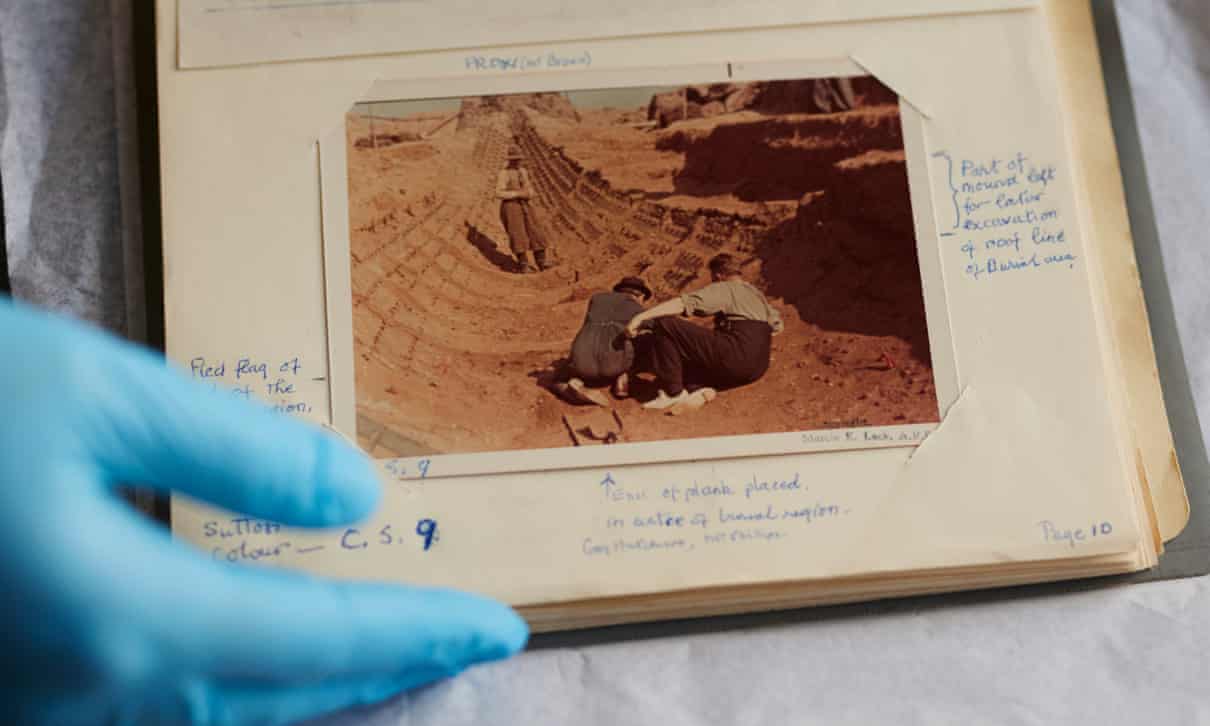
‘Prickles down the neck’: project reveals unsung female heroes of Sutton Hoo dig


The trust believes the resulting images are among the earliest surviving colour photographs of any major archaeological dig. Photograph: David Levene/The Guardian

Barbara Wagstaff and Mercie Lack’s photographs of 1939 excavation left in plastic bag at National Trust

It was 12 years ago that conservator Anita Bools first laid eyes on photographs which had been left in a plastic bag at the reception of the National Trust site Sutton Hoo by a mystery donor.

She remembered they were laid out on tables for her to see and decide how important they might be. “It was one of those moments you get prickles down the back of your neck. I thought ‘my goodness … this is the genuine thing’. It almost felt like the archaeological discovery itself.”

The hundreds of images in meticulously prepared albums were from August 1939. In fascinating detail they captured the excitement of one of the most extraordinary archaeological digs in British history.

On Wednesday, the trust announced it had completed a project conserving, digitising and making the photographs taken by Barbara Wagstaff and Mercie Lack, two schoolteachers and friends with a passion for photography and archaeology, publicly available.

Read the rest of this article...

Monday, 27 September 2021

Viking Map of North America Identified as 20th-Century Forgery


 It seemed too good to be true. Acquired by Yale University and publicized to great fanfare in 1965, the Vinland Map—supposedly dated to mid-15th century Europe—showed part of the coast of North America, seemingly presenting medieval Scandinavians, not Christopher Columbus, as the true “discoverers” of the New World.

The idea wasn’t exactly new. Two short Icelandic sagas relate the story of Viking expeditions to North America, including the construction of short-lived settlements, attempts at trade and ill-fated battles with Indigenous peoples on the continent’s northeastern coast. Archaeological finds made on Newfoundland in the 1960s support these accounts. But this map suggested something more: namely, that knowledge of Western lands was reasonably common in Scandinavia and central Europe, with Vikings, rather than Columbus and his Iberian backers, acting as the harbingers of the colonial age.

Read the rest of this article


Temple at Uppsala

 .

Temple at Uppsala History Channel

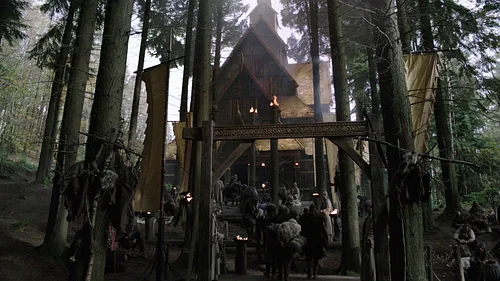
The Temple at Uppsala was a religious center dedicated to the Norse gods Thor, Odin, and Freyr located in what is now Gamla Uppsala in Sweden. It is described by the 11th-century historian Adam of Bremen as the most significant pagan site in the region and was destroyed by the Christian King Inge the Elder c. 1080.

The site is also referenced in the Ynglinga Saga of the Heimskringla written by the Icelandic mythographer Snorri Sturluson (l. 1179-1241) and the Gesta Danorum of Saxo Grammaticus (l. c. 1160 - c. 1220). In every case, it is associated with the gods of the Norse religion and in Adam and Saxo with human sacrifice. At the time Adam was writing (c. 1070), Christianity was still contending with the old Norse beliefs for supremacy in the region, while in Saxo’s time, it was more established. Both wrote from a Christian point of view and so cast the temple and its rites in a negative light. Sturluson was recounting ancient myths for his age and so humanized the gods, making deities like Odin into great kings of the past rather than gods and so avoided having to demonize the site for a Christian audience.

Read the rest of this article..

Tuesday, 10 August 2021

Melting ice and a high altitude dig reveal Viking secrets in Norway

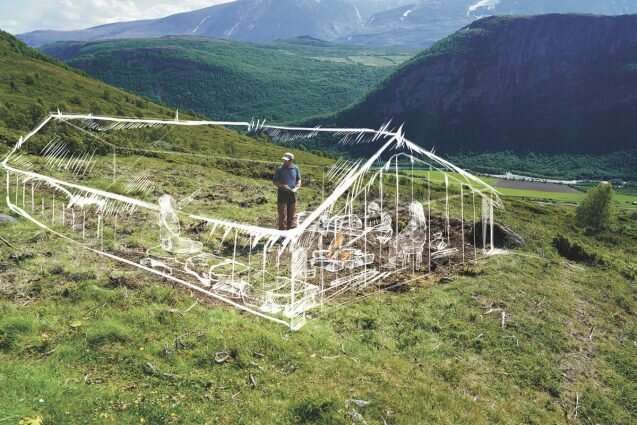
A proposed digital reconstruction of one of the ancient Viking homes,
featuring Secrets of the Ice team member Elling Utvik Wammer.
Credit: Secrets of the Ice. Illustration: Espen Finstad/Hege Vatnaland

The summer of 2011 was unusually hot for southern Norway. Where high mountain passes had been choked with snow and ice in previous years, surveyors and team members of the acclaimed Secrets of the Ice project found only jumbled talus and meltwater. Picking their way through the boulders that covered the ice-free Lendbreen pass, the crew soon realized they had walked into a vast archaeological treasure, one that had stayed frozen for a thousand years. They began to collect countless tools, artifacts and weapons—items that had once been in the possession of Vikings.

After receiving international attention for their discovery, the crew decided to return to Lendbreen this summer in search of deeper answers. Questions remained, such as what purposes had occupied these alpine travelers and where they had been traveling. In search of understanding, team members ventured across and beyond the Lendbreen pass, which over the years has revealed clothing, household items, sleds and animal remains, among other artifacts.

Thursday, 5 August 2021

DNA Testing Just Revealed That This 1,000 Year Old Finnish Viking Was Likely A Well-Respected Intersex Warrior

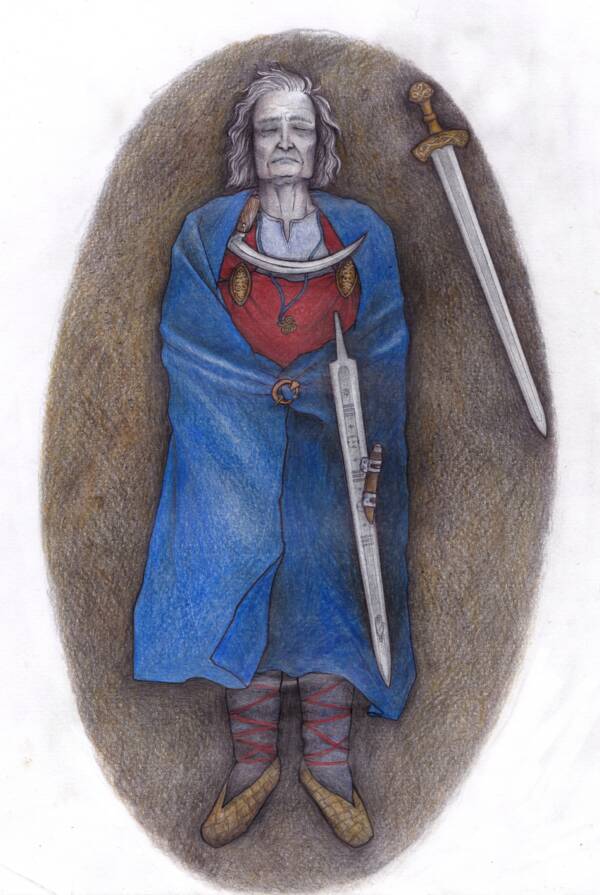
A depiction of the Viking warrior as they would have been laid in the grave.

The Viking remains, which date to between 1050 and 1300, were buried with both male and female objects, suggesting a highly-regarded member of society with a non-binary gender identity.

In 1968, ditch-diggers in Suontaka, Finland, came across a puzzling mystery. They found a 1,000-year-old skeleton buried in women’s clothing — next to two swords. Archeologists speculated that they’d found a double burial, or perhaps evidence of a woman warrior.

In fact, DNA testing has shown that the skeleton was likely intersex, according to a study recently published in the European Journal of Archeology.

“According to current data, it is likely that the individual found in Suontaka had the chromosomes XXY, although the DNA results are based on a very small set of data,” explained Elina Salmela, a postdoctoral researcher from the University of Helsinki.

For decades, the grave has confounded archeologists. The warrior, who likely died around 1050 to 1300, wore women’s clothing and had been buried with furs and jewelry. But its grave also contained two swords, including one laid at the skeleton’s hip, usually associated with male Viking burials.

Read the rest of this article...